Magical Munas
“Ser Espanol es un orgulo; ser asturiano es un titulo.”
"To be Spanish is a matter of pride; to be called Asturian is a title.”
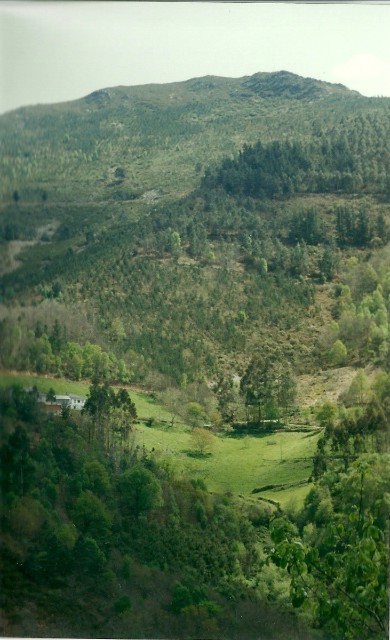
Leave behind you the steel mills of Aviles and the factories of Gijon. Saunter along the majestic N634 or the N632 from the ports of Santander or Bilbao and you’ll discover Asturias, the province the locals believe is the crown of all Iberia. This crown is tucked away in the foothills of some anonymous but stunning hills that remain unspoilt by modern day tourism.
Munas de Arriba or ‘higher Munas’ nestles over its neighbour, Munas de Bajo (lower Munas). You could be forgiven for missing then as you drive on past following the Camino Trail to Santiago de Compostela. Only the most discerning nature lover will stop here for an overnight stay or two, to relish the delights of Magical Munas.
It’s a hotch potch of houses perched on slopes and in various stages of refurbishment, some of which have been abandoned completely; the elderly occupants dying and their children immigrating to the bigger cities such as Aviles and Oviedo in search of jobs and wealth. The young, it seems, no longer want to work the land. A few dilapidated houses have been bought by prosperous Madrilènes or the like, who have renovated them for holiday homes.
Predominantly white, these houses are punctuated by those painted in shades of lemon, pink and peach. Most of the houses have steps up to their front doors; the ground floor having been used as stables or servants quarters in bygone days. Nowadays these ground floor areas either remain as storage areas or have been tastefully modernized to create more living space.
There are a few large four and five storey houses that dominate the village; a reminder of locals who emigrated to Cuba and then having made their fortunes in trades connected to tobacco, bananas, coffee and sugar came back to Spain (and Munas), settling here, flaunting their wealth. These are the Indianos.
Interspersed amongst the homesteads are ‘horrerios’ in various states of disrepair but still used for their original purpose of storing grain and vegetables; their stone mushroom shaped legs protect against the invasion of vermin. Cars that possibly predate the Civil War sit sorrowfully underneath them; their battered body work, a testimony to the elements.
A local legend tells that the old villagers were rebels against Franco in the Civil War. A faithful of the dictator betrayed them and several dozen were murdered as a result. They were supposedly buried in the area in a mass grave. It is said that the betrayer was known to the village and so he was dealt with accordingly. However it is a subject that no one talks about today, no matter how much they know. Maybe the Tremaloes were right when they sang that silence is golden.
Narrow lanes are splattered with dung, an indication of the main activity of the village! Multi coloured cows graze the surrounding fields and are often seen lumbering, escorted by their owners, gracefully along the lanes to be milked or to fresh grazing. Their neck bells jingle gently in the breeze. Chickens squawk and sheep baa. The thriving community of feral cats contain the rat and mouse population.
On high days and holidays the music of the gaita (the Asturian bagpipes and one of Asturias’ many idiosyncratic traditions) can be heard resounding through the surrounding valleys.
Winter mornings start at a temperature of minus five degrees with the fields shrouded in a thick cape of frost. The lonely farmstead deep in the valley stays cloaked in frost throughout the day despite the fact that the upper realms of the valley enjoy midday noon temperatures of around seventeen degrees.
This is a village where the residents are people minded. A carrier containing a couple of potatoes, a lemon and three eggs will miraculously appear on your deep step. Strolling past your neighbour’s house they’ll pull an apple from a tree and offer it to you and often you’ll be invited to take coffee..........